MotoBros Vlog · Lewisville, TX
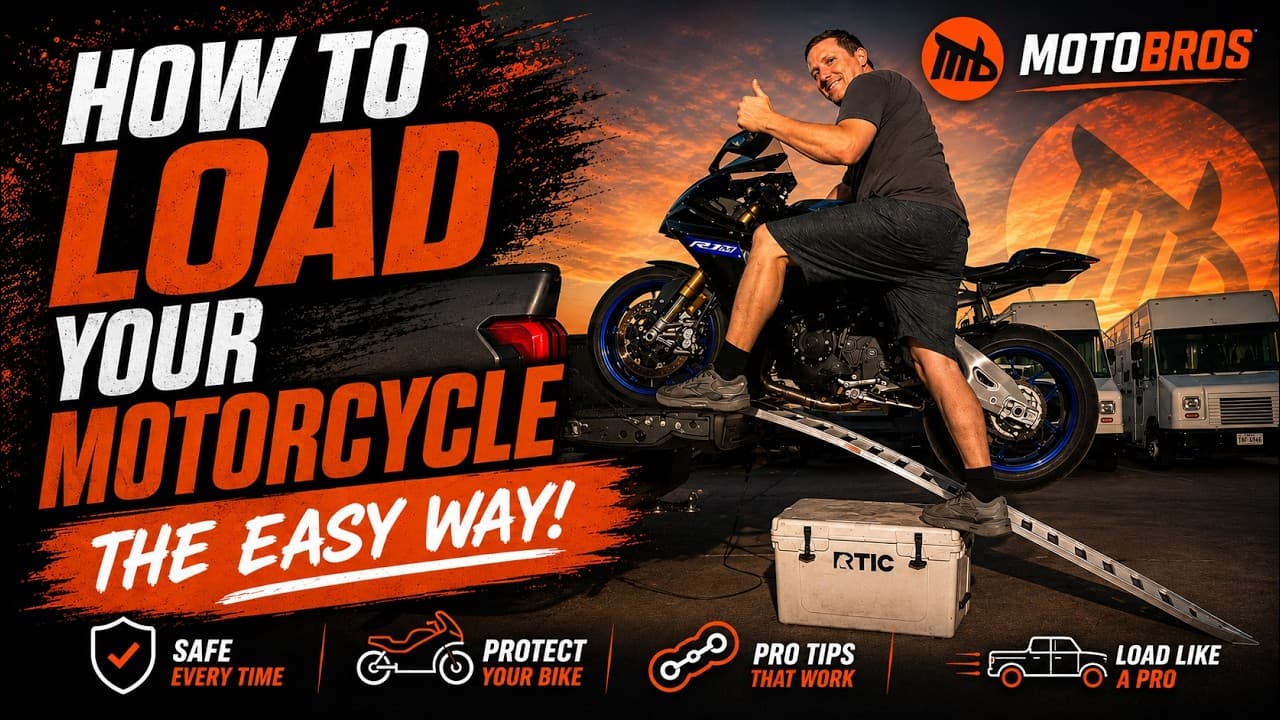
STOP Struggling! The Easiest Way to Load a Motorcycle Into a Truck
No curb, no loading dock, no incline. Grom, R3, and R7 into the truck, plus the Cycle Cinch setup Craig uses at MotoBros.
Read the vlog
STOP Struggling! The Easiest Way to Load a Motorcycle Into a Truck
How I Load Motorcycles Into My Truck by Myself
All right, here we go. Today we're doing something that almost every motorcycle rider has to deal with at some point: getting your bike into the back of a truck.
And I already know how the comments are going to go.
If I only load a Grom, somebody is going to say, "Craig, that doesn't count. That thing weighs nothing."
So I brought out the Grom, the R3, and the R7.
No curb. No loading dock. No incline. Just a truck, a ramp, and a few motorcycles.
The whole point of this video is to show you that loading a bike gets a lot easier when you understand how it balances and how it reacts. You don't need to be the strongest guy in the world. You need to know what you're doing, have the right setup, and take your time.
The Most Important Thing Nobody Talks About
Before we even touch the ramp, I want to talk about the balance point.
When you see me moving a motorcycle around, I'm not panicking every time it leans a little bit. I know what that bike feels like. I know how much weight I can control, and I know when I need to stop and reposition myself.
That comes from years of experience.
It's the same thing I'm always telling you guys about riding: the more you understand your motorcycle, the easier everything becomes.
But if you're new to loading bikes, don't try to copy every move you see me do. Get somebody experienced to help you, practice with a lighter bike, and build up your confidence. There's no prize for loading a motorcycle alone if you're not comfortable doing it.
First, Set Up the Ramp Correctly
The ramp needs to sit securely against the truck bed, and it needs to be properly secured to the truck.
I know we didn't always have all these little safety straps back in the day, but that doesn't mean you should skip them now.
A ramp can move if the rear tire spins, if the bike shifts, or if the setup isn't secure. You do not want to find that out halfway up with a motorcycle in your hands.
So secure the ramp, check that it can't slip, and make sure the truck is parked on firm, level ground.
If you have a proper loading step or platform, set that up too. Make sure it's stable and rated to support you. I've seen people use empty coolers at the track, and I've also seen them collapse. That is not how you want your trackday to start.
The Grom: Loading 101
We started with the Grom because it's the easiest one.
It's light, easy to handle, and a great bike to demonstrate the basic idea.
I can push it up without much of a run-up, get it into the bed, and put the kickstand down.
Done.
But the reason it looks easy isn't just because it's a Grom. It's because I know where the bike balances.
When it comes time to unload, I like having the motorcycle on my left side so I can control the front brake with my fingers. I keep the bike straight, control the speed, and walk it down.
That's the foundation.
The R3: A Little More Motorcycle
Next up was the R3.
Now we've got a little more weight and a little more bulk, so you have to pay attention to your position.
You can use the engine to help move the bike up the ramp, but you need smooth clutch and throttle control. Dumping the clutch or spinning the rear tire can create a dangerous situation, even with the ramp secured.
If you're not comfortable using the engine, get help and push the bike instead.
The important thing is to have a plan before you start. Know where you're going to step, where your hands need to be, and how you're going to transition into the truck bed.
When I'm pushing a bike solo, I like getting the front wheel onto the bed before changing my position. That gives me a better place to control the motorcycle while I climb up and pull the rest of it in.
But that doesn't mean the bike is magically safe just because the front tire is on the bed. You still need to control the brake, keep the bike balanced, and make sure you can safely make that transition.
If you're unsure, have a second person help. Two people can make the whole process considerably easier.
Unloading Is Where You Really Need to Pay Attention
Getting the bike into the truck is only half the job.
When you unload, you need to think about where the motorcycle is going to be as it crosses the edge of the bed and starts down the ramp.
With the R3, there's more bike in the way of your arms than there is with the Grom. That means I have to be more deliberate about where I stand and how I control it.
I keep the front wheel straight, control the brake, and move slowly.
The biggest thing is not letting the motorcycle get away from you. Once it leans past the point where you can comfortably support it, you can get into trouble very quickly.
So don't rush. Don't jump into a position you haven't practiced. Use a stable step or have somebody help you.
The goal is to get the bike down safely, not to make it look impressive.
Now Let's Load the R7
I wanted to put the R7 in the truck because it's another step up in size, and I also wanted to show you guys the tie-down system I've been using for years.
This isn't sponsored.
I just really like the Cycle Cinch.
It's an all-in-one system, and one of the things I appreciate is that I'm not dealing with a bunch of separate pieces every time I load a motorcycle.
We keep them in stock at MotoBros, and I'm offering $5 off for you guys. You can find them at motobros.net.
My Favorite Way to Strap a Bike Down
The Cycle Cinch goes over the handlebars, with the sewn side positioned correctly on the outside. The two sides connect so the system stays together and maintains tension.
Then I attach the tie-downs to the truck's proper anchor points and start putting tension on them.
One little trick I use is temporarily hanging the loose strap somewhere convenient while I'm working, so I don't have to keep leaning over the motorcycle to grab it.
Then I tighten everything evenly and make sure the bike is secure.
You want the motorcycle stable, the straps properly routed, and the suspension compressed only as much as needed for the tie-down system you're using. Follow the strap manufacturer's instructions and make sure nothing is rubbing against or damaging the controls, bodywork, or brake components.
Before driving, check every connection and secure the loose strap ends so they can't flap around.
What About the Rear of the Motorcycle?
In the video, I talk about how I've often transported motorcycles in a pickup bed with the front secured and without a separate rear tie-down.
That's my experience, but I don't want anybody taking that as a universal rule.
The safest setup depends on the motorcycle, truck, anchor points, tie-down system, and the manufacturer's instructions. Securing the rear helps prevent side-to-side movement and bouncing, and it's especially important on trailers.
If you're unsure, use additional properly rated tie-downs and follow the recommendations for your equipment.
A motorcycle coming loose on the highway is not something you want to gamble with.
Keep Your Trackday Setup Simple
One thing I've learned from doing this for so many years is that you don't want to bring 50 things you don't need.
If the bike fits in the truck and you can close the tailgate, great.
If it doesn't, make sure the motorcycle, tailgate, ramp, and all your gear are secured properly for transport. Don't rely on loose equipment to hold other equipment in place.
I like using the gear I'm already taking to the track, but everything still needs to be safely secured.
The less unnecessary stuff you bring, the easier your day becomes.
You don't want to spend an hour unloading a mountain of equipment before you can even get your motorcycle ready.
Trackdays are supposed to be fun.
Why I Prefer the Cycle Cinch
I've used hundreds of Canyon Dancers over the years, and they work, but I've always liked the simplicity of the Cycle Cinch.
Everything is together.
You're not hunting for separate pieces.
You put it on, secure the bike, and get on the road.
That's why I keep recommending them. I've used them for years, and they've made my own loading routine easier.
If you want to check them out, head over to motobros.net. We've got them in stock, and I'll save you $5.
The Biggest Takeaway
I loaded the Grom, the R3, and the R7 because I wanted you guys to see that the same basic principles apply to different motorcycles.
But every bike is different.
A heavy touring bike, a cruiser, a sport bike, and a Grom are not all going to feel the same. The ramp angle, truck height, and weight of the motorcycle all change how difficult the job is.
So get to know your bike.
Practice moving it around.
Understand its balance point.
Use the right equipment.
And don't be afraid to ask for help.
If you have a curb or loading dock that makes the job easier, use it. There's nothing wrong with making your life easier.
This video was for the times when you don't have those options and you still need to get your motorcycle to the track.
And speaking of the track, come out to a MotoBros trackday. If you've never been before, give us a call. We'll help you get started, show you the ropes, and make sure you have a great time.
Thanks to Aaron for running the camera.
I appreciate you guys watching, and I'll see you in the next one.
Please ride safe and grow your skill.
Craig, MotoBros
Watch the vlog
Play it here. You stay on motobros.net.
Subscribe on YouTube · Visit the shop